For my inner circle, from Marc
tubkns
The baby bar
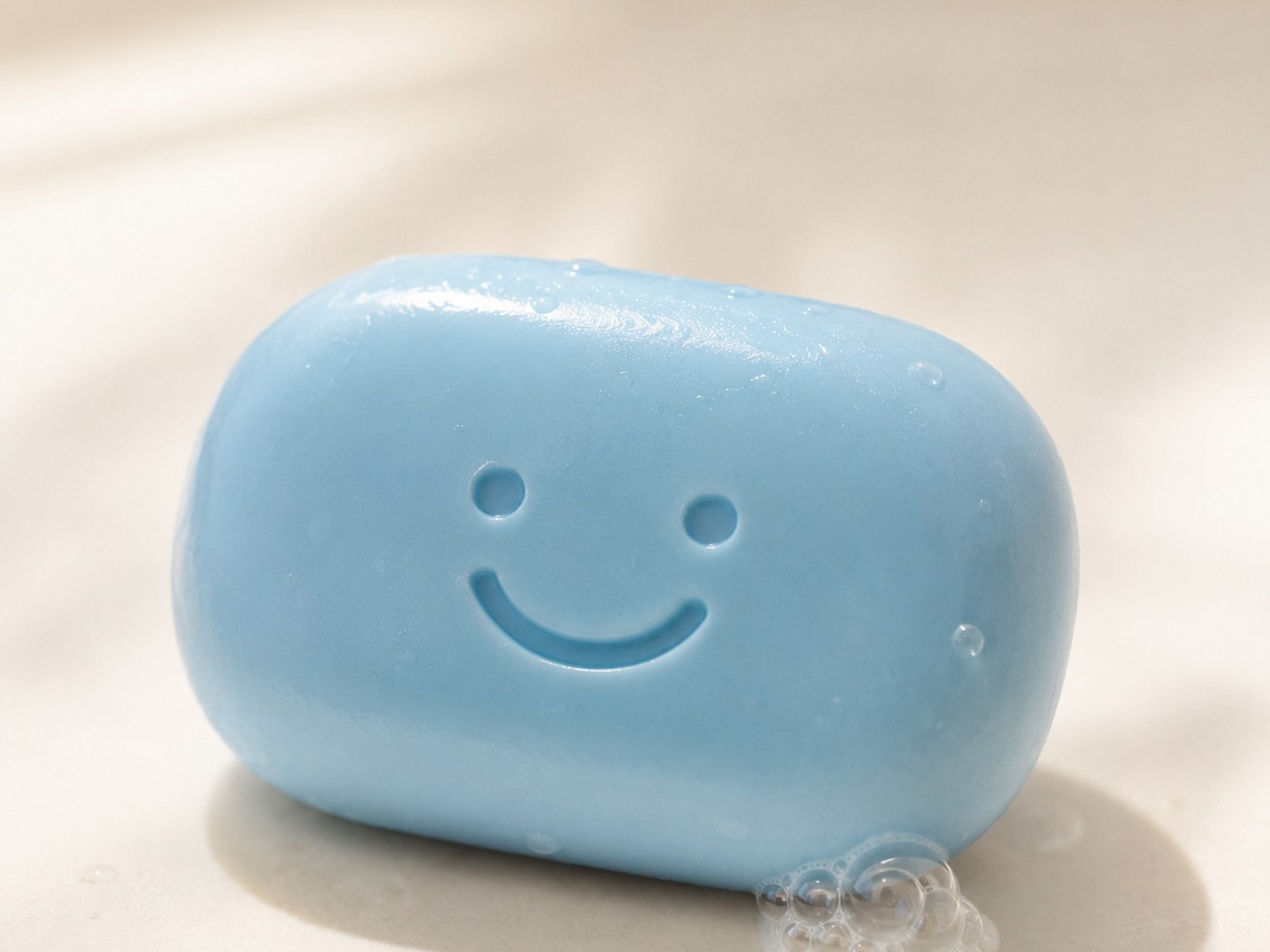
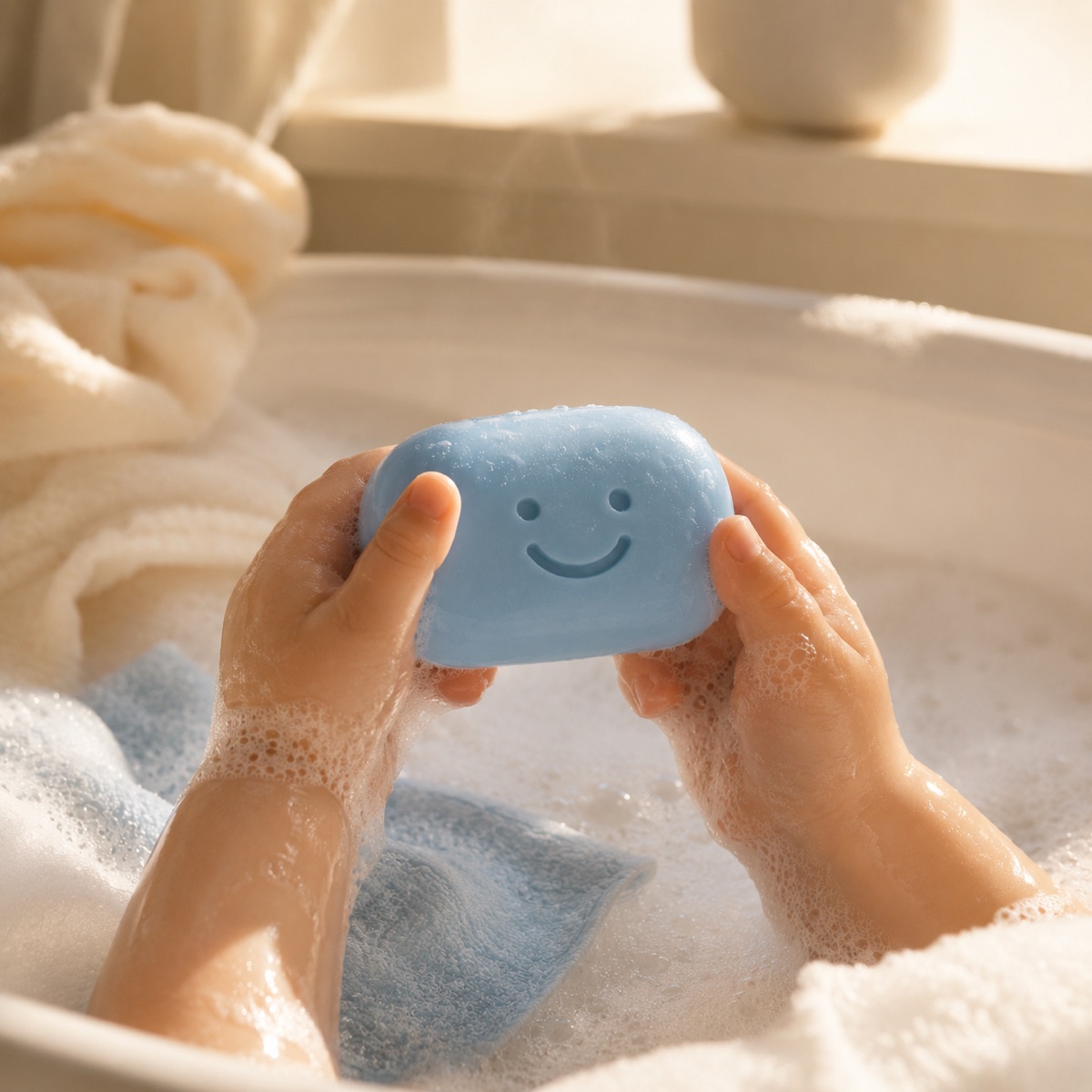
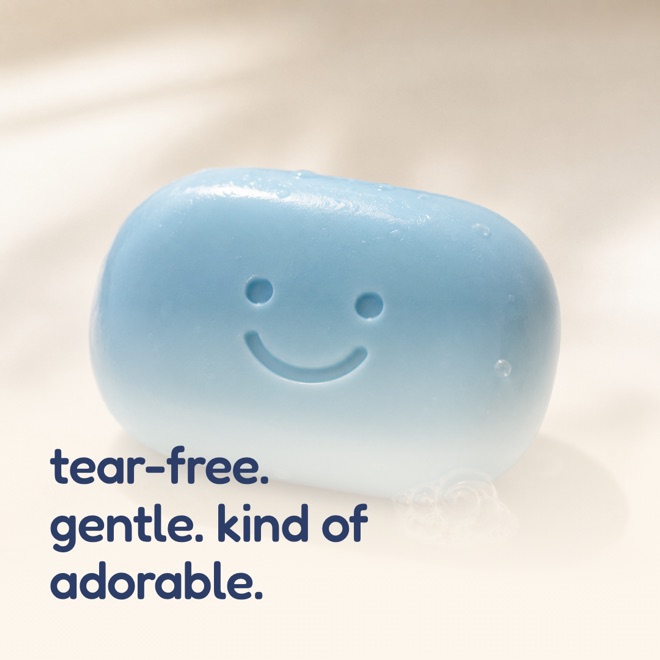
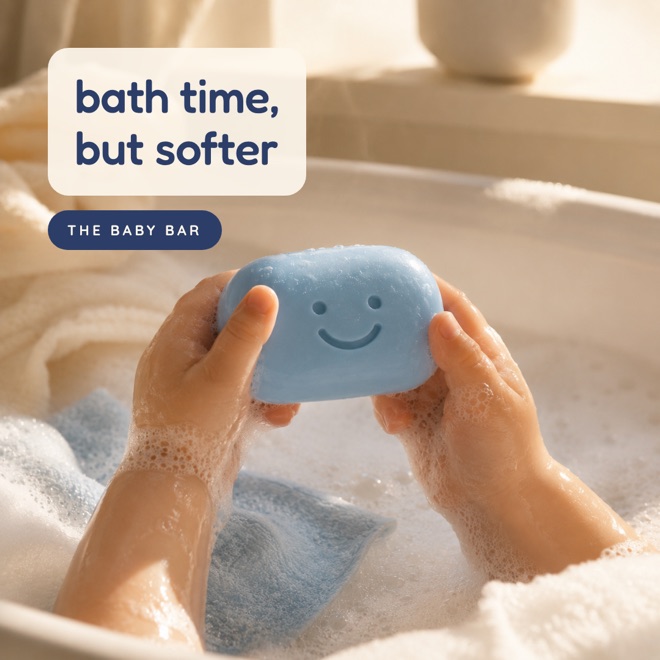
A tear-free bar of baby soap with a face on it. Nobody has made bath time something a baby reaches for.
The idea
Take the most boring object in the nursery and give it a personality.
Almost every baby wash on the shelf is the same liquid in the same plastic bottle, and the few bars that do exist are either old-fashioned soap or a plain white oval. Meanwhile bar soap has quietly come back, because it costs less per wash, travels better, and skips the plastic entirely.
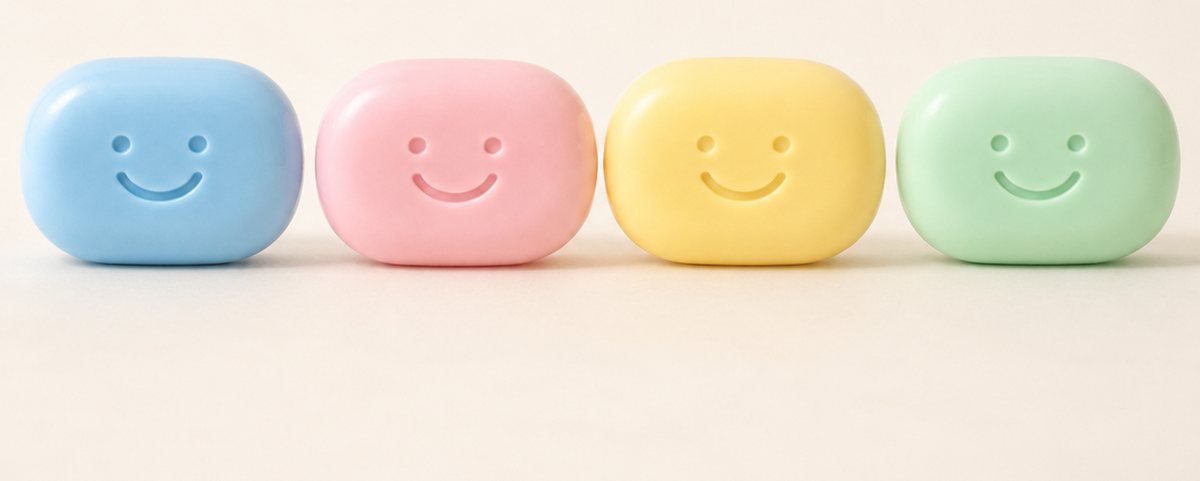
So: a gentle, tear-free cleansing bar made specifically for babies, shaped like a friendly character with a face pressed into it. It cleans hair and body. It comes as a cast of characters in different colors, so there is a reason to collect them, gift them, and keep buying them.
This is not really a soap business. It is a character brand that happens to sell soap. That distinction is the whole thing.
Why it might work
The numbers are not the exciting part. The empty shelf is.
The wider baby personal care market gets quoted anywhere from seven billion to ninety six billion dollars depending on whether you count diapers and wipes, so I am using the narrow number above and ignoring the flattering one. As for the bars that do exist, I read the labels. Johnson's still sells one, but it is old-fashioned true soap, saponified tallow at a pH that strips infant skin. Dr. Bronner's baby bar is castile, same problem. Baby Dove and Cetaphil both sell a genuinely mild bar built on gentle synthetic surfactants, so mildness is not the open ground and I am not going to pretend it is. What none of them has is a face. Every one is a plain white or cream oval that looks like something you apply, not something you play with. Past those, the Amazon baby bar category is a wall of anonymous packaging. The gentle bar already exists. The one a baby reaches for does not.
The playbook already exists
Two people got rich adding a face to something nobody thought about.
A sponge with a smile
The face was not decoration. The mouth cleans utensils and the eyes clean glasses. Shark Tank, then QVC, then everywhere. Past one billion dollars in lifetime sales. It also runs licensed Disney shapes now, which is exactly the second act I have in mind.
Soap, but with a point of view
Picked an underserved audience, led with personality and content rather than chemistry, and sold to Unilever for one and a half billion dollars. The asset was the audience and the brand. The soap was almost incidental.
A cast beats a product
Distinct characters with names and personalities turn one purchase into a collection. Apply that to a four dollar consumable that gets used up every few weeks and the repeat purchase math becomes very friendly.
The cast
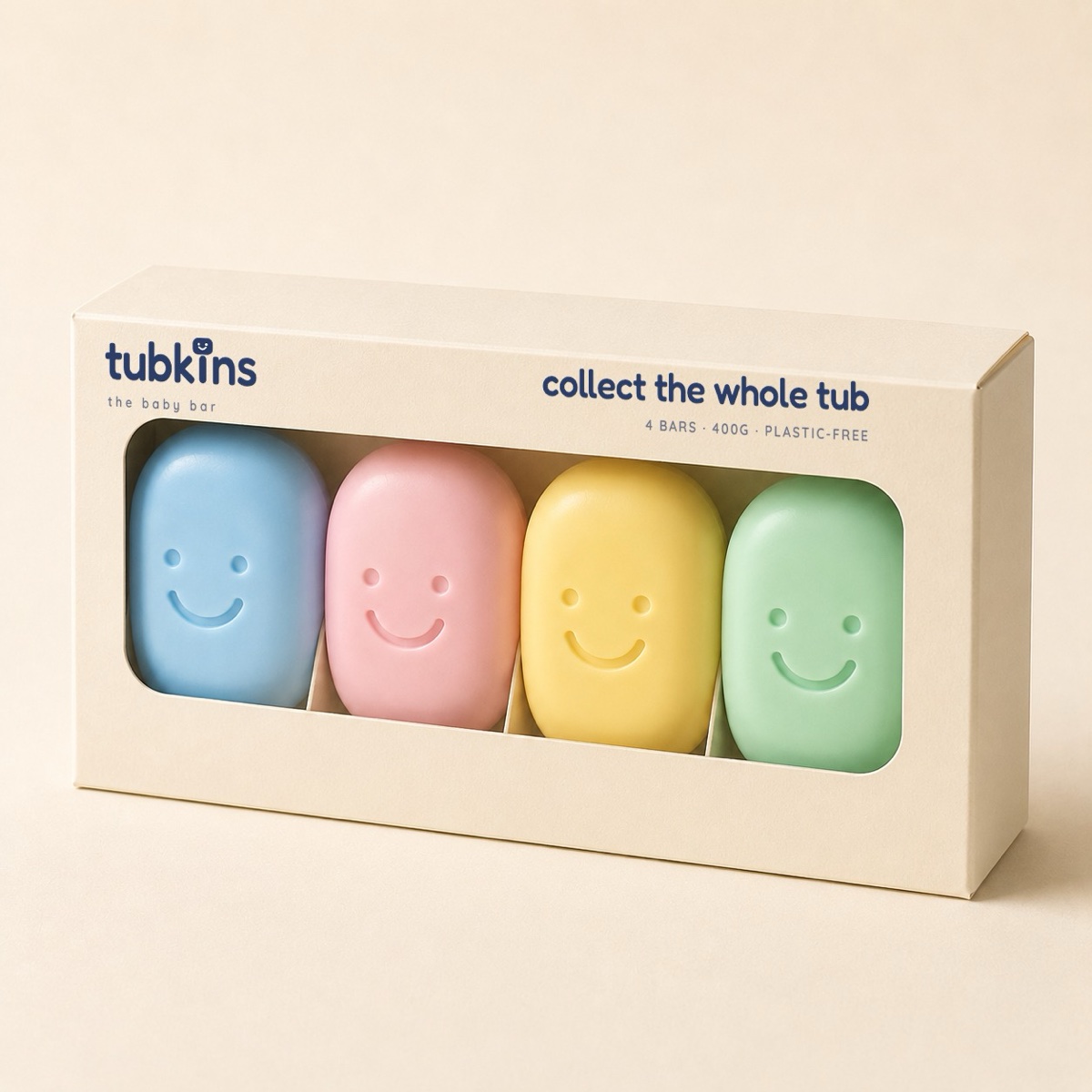
One shape, four friends, endless reasons to buy another.
Each character gets a color and a name. The whole line is fragrance-free, so they differ by color, not by scent. Rounded shapes with no sharp edges and no small parts, which is both the friendly look and the safe one.
 tubkins
poppy
sunny
minty
tubkins
poppy
sunny
minty
The brand
It already looks like a company, not a slide.
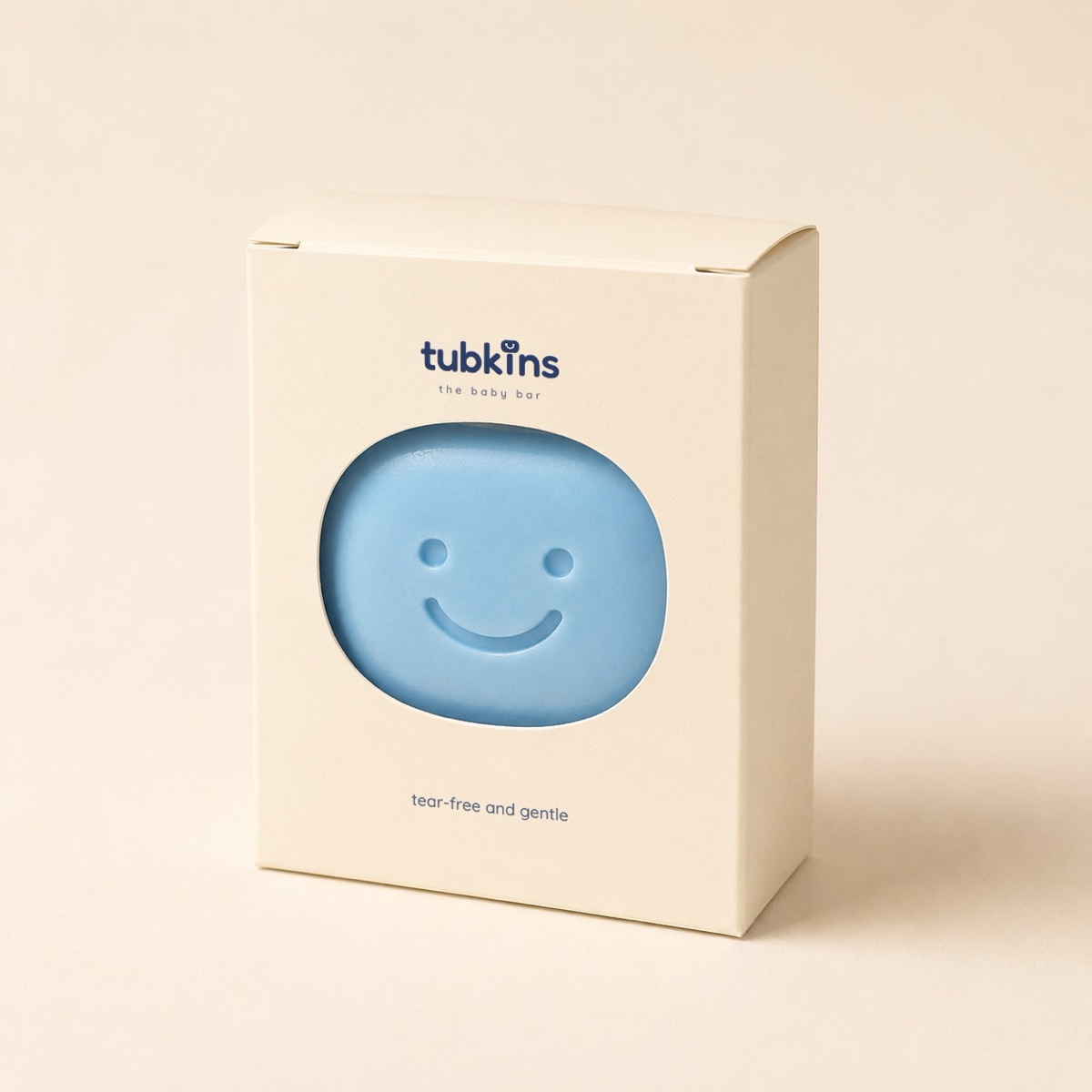
The mark is a bar of soap with a face pressed into it, sitting where the letter i belongs. It works in one color, forward and reversed, so it survives a carton, an embossed die, and a phone screen.
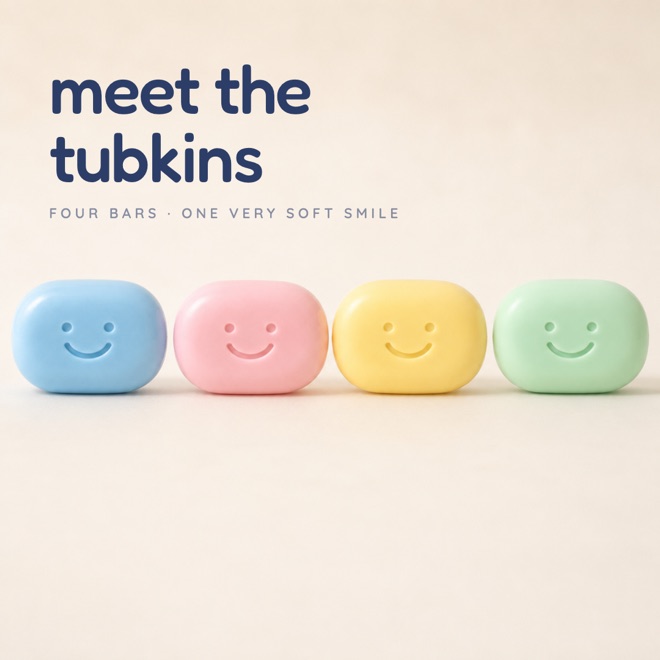
And it is ready to post. These are the launch tiles, built from the same four characters, which is the cheapest marketing a baby brand has: a face people want to share.
What it is made of
Naturally derived, and honest about the word natural.
There is a real conflict here worth naming out loud. "Syndet" is short for synthetic detergent, so a bar mild enough for a newborn cannot also be one hundred percent natural. Anyone who tells you otherwise is selling something.
The industry-standard mild surfactant, sodium cocoyl isethionate, cannot be COSMOS or Ecocert certified, because its synthesis runs through ethoxylation with ethylene oxide. So we build on sodium cocoyl glutamate instead: derived from coconut and sugar, certifiable, very mild, and already sitting near a pH of 5.5 before we adjust anything.
| Component | What it does |
|---|---|
| Sodium cocoyl glutamate | Primary cleanser, COSMOS certifiable |
| Sodium cocoyl glycinate, coco-glucoside | Foam and lather |
| Shea butter, sunflower oil | Superfat, protects the skin barrier |
| Vegetable stearic acid, kaolin clay | Hardness, so it survives a wet tub |
| Ultramarines and iron oxides | The only colors we are legally allowed |
| No fragrance at all | Not a shortcut. A decision. |
The colorant trap, which nobody warns you about
Because our bar is a syndet making cosmetic claims, it is a cosmetic under FDA rules, and a cosmetic may only use FDA-approved color additives. Botanical colors like spirulina and beetroot are not on that list. Dr. Bronner's is allowed to use them precisely because it is true soap and exempt from those rules. We are not, because our product is the better one for babies. That leaves the mineral list, mostly ultramarines and iron oxides.
What that costs usBlue and pink come through beautifully. Green goes quieter. Bright yellow is not achievable from a mineral pigment, so Sunny is either a softer ochre or the cast loses yellow. I would rather show you that now than have you find it at the tooling stage.
We will not say "one hundred percent natural"
The FTC has declined to define the word, which means there is no safe harbor, only exposure. The Honest Company was sued in New York and California in 2016 over exactly that claim, in exactly this category, and it is already the cautionary tale on the money slide.
What we say insteadA number we can defend. Calculate the natural origin index under ISO 16128, print the percentage on the carton, and pursue COSMOS or EWG Verified so a third party carries the meaning the adjective legally cannot.
The hard parts
Four real problems, and how each one gets solved.
A bar of soap is bad for baby skin
True, and this is the one that kills the idea if we get it wrong. Traditional soap runs at a pH of nine or ten and strips infant skin, which is why almost every baby wash is liquid and why the old bars on the shelf are the wrong product.
The fixIt cannot be soap. It has to be a syndet bar, formulated to skin pH around 5.5 on gentle surfactants, which is the same technology inside a Dove beauty bar. This is settled, not speculative: Baby Dove already sells exactly this chemistry for infants, which means the hard formulation question has been answered by someone with more to lose than us. Stephenson sells a baby-suitable syndet base off the shelf, and Twincraft in Vermont and Vanguard in Memphis both produce bars at scale and hold hundreds of molds.
Babies put everything in their mouths
A small, colorful, toy-shaped object aimed at infants is a fair thing to worry about, and it is the first question any serious operator will ask.
The fixNever embed a toy, which is where the actual recalls in this category come from. Make the bar larger than the federal small-parts cylinder, keep the form a single rounded solid with nothing that snaps off, and keep the formula low irritant so incidental mouthing is unpleasant rather than dangerous. A friendly shape is not a toy, and it should not pretend to be one.
Complicated shapes are expensive to make
Fully sculpted three dimensional characters have to be cast in molds, slowly, at a much higher cost per unit than the extruded bars that fill the drugstore aisle.
The fixThe hero bar is a rounded shape with the face pressed in as a relief, which runs on cheap high speed equipment. That is precisely what Scrub Daddy does. Save the fully sculpted characters for premium and limited edition drops, where the higher price covers the slower process.
Unilever could do this next week
This is the one that worries me most, and it is worth saying out loud rather than letting you find it. Unilever already owns both halves of this idea. Baby Dove is a mild synthetic detergent bar for infants that they manufacture at scale today, and in November 2025 they closed the one and a half billion dollar purchase of Dr. Squatch, which bought them the personality-brand playbook. Pressing a face into a bar they already make is not a hard project for them.
The fixAccept that the formula is not defensible and stop selling it as though it were. What is ownable is the cast: the characters, their names, the artwork, and the trademark, none of which a competitor can copy the way they can copy a surfactant blend. So move first, register the intellectual property early, and take the registry and specialty shelf while a company that size is still deciding whether a four dollar novelty is worth a line review. And if the honest outcome is that they would rather buy this than build it, that was the plan all along.
The money
The margins are good, if we price it like a brand and not like soap.
| Line | Per bar |
|---|---|
| Retail price | $8.99 |
| Wholesale price | $4.50 |
| Cost to make and pack | ~$1.50 |
| Margin selling direct | ~83% |
| Margin selling wholesale | ~67% |
These are modeled figures, not quotes, and they need to be confirmed with a manufacturer. They also assume the industry-standard surfactant, and the certifiable naturally derived one costs more, so treat the cost line as a floor rather than a number. The real risk is not the soap cost, it is retail. Slotting fees and trade spend eat fifteen to twenty five percent of revenue, and Hello Bello went bankrupt in this exact category despite doing a hundred and seventy nine million dollars in sales. So the plan sells direct and through baby registries first, where the margin actually stays with us, and only walks into Target with proof in hand.
Rough capital to get to shelf: five hundred thousand to one and a half million dollars.
How it gets built
Nine to fifteen months from idea to something you can hold.
-
Formulate and test 3 to 6 months
Commission the syndet bar at pH 5.5, then pay for the eye irritation and dermatologist testing that makes the tear-free claim honest. This happens first, because everything else depends on it.
-
Brand, mold, and clear the name runs in parallel
Design the cast, cut the tooling, print the cartons, and file the trademark. The name is set: Tubkins. The .com is registered, and the mark has cleared a federal knockout search and the Pennsylvania registers.
-
Launch direct, Amazon, and Babylist months 9 to 12
Babylist runs the registry for more than half of first time parents. A cute character bar is close to a perfect baby shower gift, which is a far cheaper way to find customers than buying ads.
-
Walk into retail with receipts year two
Target and specialty baby once the velocity data exists. Character licensing after that, once there is enough volume to make a Bluey or Sesame Street deal worth signing.
What I actually want to do
Hand this to someone who can build it.
I am not going to manufacture soap myself. What I can do is take a finished idea to someone who already operates in this space, the research done, the risks named, and the brand fully designed, and see whether it gets someone excited enough to run with it.
You are one of a handful of people I trust that I am showing this to. The name is decided, Tubkins, and it has cleared trademark and domain checks. The brand is designed and the product you see above is real. All I want back is your honest gut read, and, ideally, to see you a little bit excited.
Three questions, if you have five minutes: would you buy it, who should I be talking to, and what is the part that made you wince?